
Is Aotearoa funding good work - or good storytellers?
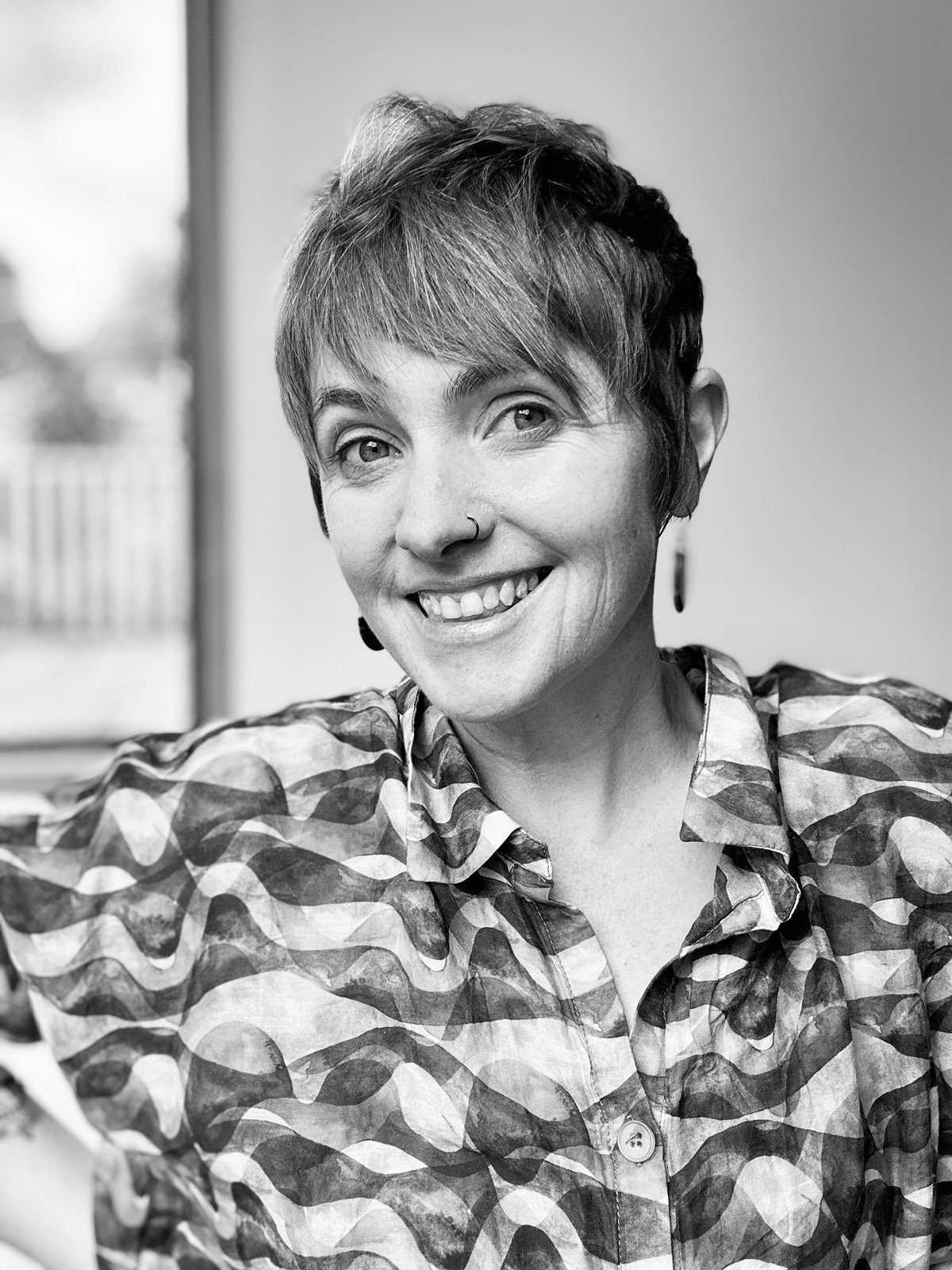
Lani Evans, co-founder of Fundsorter
A funding application can determine which social issues receive attention, resources and time. Yet the organisations doing the most valuable work are not always the ones with the resources to explain it in the language a funder expects.
That is partly a communications problem. But it is also a question of power: who gets heard, whose evidence counts and what kinds of work are easiest to recognise and support.
For organisations working on complex social issues, the challenge is not simply to tell a more compelling story. It is to make the work understandable without stripping away the context, people and systems that make it meaningful.
I explored these issues with Lani Evans, co-founder of Fundsorter, a platform that helps community organisations find relevant funding opportunities and makes the application process easier to navigate. Lani has spent much of her career working across philanthropy, social enterprise and the community sector, giving her a close view of both the funding system and the organisations trying to work within it.
Her perspective raises some useful questions for anyone communicating social change - and trying to secure support for it.
What gets funded is partly about what can be understood
Lani sees a gap between what funders say they will prioritise and what actually gets funded.
She points to Fundsorter’s regional funding reports, which show issues such as climate change and poverty relief appearing frequently as stated priorities while receiving relatively little funding.
At the same time, Aotearoa is comfortable funding areas such as sport, the arts and education because they are “visible, well understood and mostly uncontested”.
Other issues can be harder to fund. “We’re much less likely to fund identity-based issues like gender equity, where the work is harder to explain and can feel more political,” she says.
Some of that, Lani argues, is about values, and some is about how funding institutions are designed and who makes the decisions.
For communicators, this raises a practical question: what kinds of work are we helping people see - and what kinds remain difficult to recognise?
Complex social issues rarely fit neatly into a problem, solution and outcome. The work may involve changing systems, shifting behaviour or building relationships over many years. If we simplify it too far to make the case clearer, we can end up removing the context people need to understand it.
This is also where Lani’s observations about funding applications become relevant.
“Writing a good application takes skill. You need to understand what each funder is looking for, match your work to their criteria and explain it clearly, and all of that takes time.”
Around 42% of charities in Aotearoa are volunteer-led, she says, and may not have someone with the time or experience to write a polished application.
“So without meaning to, we can end up funding the organisations that write well rather than the ones doing the most valuable work.”
That means the funding system can favour work that is already visible, familiar and easy to explain - as well as organisations with the capacity to produce polished communications.
The communications lesson is not simply to write better applications. It is to recognise that the way work is described can affect whether it is noticed, understood and funded. If an organisation has limited time or communications support, its work may be overlooked even when its impact is significant.
A good fundraising story should leave someone with more mana
There is an obvious reason communicators turn to personal stories. They make abstract issues tangible.
Lani points to a 2007 study in which people were given $5 and offered the opportunity to donate some of it to Save the Children. Those who read a story about a specific seven-year-old girl facing starvation gave an average of $2.38, compared with $1.14 among those who read statistics about millions affected by food shortages.
Paul Slovic, one of the researchers, describes the phenomenon as “psychic numbing”: one life moves us, while a million becomes an abstraction.
For organisations asking people to care, the implication is powerful. A person can make a complex issue feel immediate.
But the effectiveness of a story is also what makes its use worth questioning.
“For me it starts with who gets to tell the story. The most respectful stories are the ones people tell about themselves, on their own terms, rather than ones that are extracted from them to move a donor.”
Lani is also wary of deficit framing, where communities appear only as problems to be solved.
“Most people are resourceful and strong and our stories should reflect that.”
She adds: “A good story should leave someone with more mana than when you started telling it, not less.”
For communicators, that means the question is not only whether a story will work. It is also: who has control over it? Does the person understand how it will be used? Are they represented as a whole person? Does the story communicate agency as well as need?
A compelling fundraising story should not require someone to surrender their dignity or control over their own experience.
When evidence becomes the whole story
Data is essential to understanding social change. It can show patterns that are difficult to see from within a single organisation or funding relationship.
Lani says that when data is brought together across funders and organisations, it can show where money and mahi are flowing across a region, who is missing out, and whether funding is aligning with stated values and need.
But data cannot tell us everything that matters. It struggles to capture “trust, belonging, relationships, creativity and culture” - the qualities that often make community work possible in the first place.
That matters because the pressure to demonstrate impact can shape not only how organisations report their work, but how they do it. If systems reward what can be counted, organisations may gradually adapt their work to fit the measures available.
As Lani puts it: “My worry is that when systems reward what can be counted, we slowly start shaping our work to fit what the system can read.”
For communicators, this creates a familiar tension. We need evidence to make a credible case, but the easiest things to measure are not always the most important things to communicate.
Data can show scale, patterns and change over time. Stories can help people understand what those patterns mean in people’s lives. Neither should be expected to do the other’s job.
The challenge is to hold both together without allowing one to erase the other.
“We’re still working out how to build tools that hold both the spreadsheet and the story,” Lani says.
Can technology change the system without reproducing it?
This question becomes particularly relevant as organisations start using AI to navigate funding and communications.
Fundsorter is using AI to make finding and applying for funding easier. But Lani is cautious about assuming technology will automatically make the system fairer.
“It could go either way, and we need to be cognisant of who gets to use these tools, who owns them, and who governs them.”
Right now, she says, organisations with the most time, money and training are best placed to use AI effectively. Without deliberate intervention, that could widen existing gaps.
There is another issue too: the systems themselves reflect the information and assumptions they are built from.
“AI will pick up whatever patterns already exist in our systems, so if we want it to make funding fairer, we have to be deliberate about who’s involved in shaping it.”
That is relevant beyond funding technology. For communicators, every tool we use to decide what gets seen, prioritised or measured carries assumptions about what matters. The more technology becomes part of those decisions, the more important it is to ask whose experience is represented in the system - and whose is not.
Four questions for communicators
Lani’s experience points to four questions worth bringing into communications planning for social change and fundraising:
What might make this work difficult for an outsider to understand?
Rather than reducing a complex issue to a simple message, identify the context people need in order to understand why the work matters.
Who has agency in the story?
If you are using someone’s experience, ask whether they have meaningful control over how it is represented - and whether the story reflects their strength as well as their circumstances.
What does our evidence leave out?
Use data to understand patterns and demonstrate impact, but recognise the things it cannot capture. Trust, relationships, culture and belonging matter even when they do not fit neatly into a dashboard.
Who is our communication really designed for?
Funders matter. So do communities, partners, staff and the people directly affected by the issue. If communication is designed only to satisfy the people with the power to fund the work, we may reinforce the same imbalance we are trying to address.
These are not easy questions. But perhaps that is the point.
Lani’s broader view of social change is that the people closest to a problem usually know how to fix it. What they need is often money, time and trust - and funding systems that allow them to plan and act for the long term.
For communicators, that creates a role beyond making an organisation sound compelling.
We help determine how an issue is understood. We decide which stories are amplified. We translate evidence into something people can grasp. And increasingly, we are working alongside technologies that influence what information gets surfaced and how it is interpreted.
That makes communications part of the system, not simply a service to it.
So perhaps the question for communicators isn't simply “How do we tell this story better?”
It is: “Are we communicating the issue in a way that reflects its complexity, respects the people involved and helps the right people understand why it matters?”
